
Pediatric Feeding & Swallowing Therapy
When feeding is hard, you deserve more than another list of tips.
Kids Feeding Wellness is a pediatric feeding and swallowing practice for infants, toddlers and children—bottle refusal, starting solids, chewing, selective eating, and medically complex feeding. We help you understand why feeding is hard for your child, then build a plan that works at your table.
Based in New York City, Kids Feeding Wellness provides virtual feeding therapy for families throughout New York State—most support happens this way, particularly when parent coaching is the primary need. For families near Astoria, Queens, in-home visits are also available, and parent consulting is offered worldwide.
Argie Karakalpakidis, MS, CCC-SLP, TSSLD, CLC · Pediatric Feeding & Swallowing Specialist · 8+ years · Astoria, Queens + virtual
When Mealtimes Start to Feel Heavy
Feeding challenges can quietly take over family life. Many parents spend hours planning meals, worrying about intake, and second-guessing what to try next. Over time, mealtimes can become tense and emotionally draining for both parents and children.
At Kids Feeding Wellness, we see this pattern often. Our work begins by helping families slow things down, make sense of what’s happening, and find a steadier way forward.
Does this sound like your child?
My baby fights the bottle Refusal, aversion, feeding only when drowsy, distress at the sight of the bottle, worries about intake or weight. Bottle & infant feeding → Solids aren't going the way I expected Readiness, gagging and choking fears, textures, chewing, balancing milk and meals. Starting solids & chewing → My child eats fewer and fewer foods Selective and cautious eating, sensory sensitivity, mealtime stress, food jags, ARFID concerns. Cautious & selective eating → Feeding is part of a bigger medical picture Tube feeding, prematurity, reflux, GI or allergy involvement, genetic or craniofacial conditions—support that works alongside your child's medical care team. Medically complex feeding →
Meet Argie
Founder & Pediatric Feeding Specialist
Argie Karakalpakidis is a speech-language pathologist and certified lactation counselor with over 8 years of experience — from NG tubes in the NICU through ARFID in school-age children. Her training in oral-motor and myofunctional therapy, combined with her lactation background, lets one clinician hold the whole arc of a child's feeding story. She is also trained in attachment-based and emotion-focused approaches to feeding—reducing mealtime pressure and building the secure caregiver-child relationship that real feeding progress depends on.
Read my full story →Ready to talk about your child's feeding?
Start With a Free 15-Minute Call →Why We Work With You, at Home
Traditional feeding therapy often runs into two barriers. Here's how our approach is built to solve both.
The Problem
An Unfamiliar Room, An Unfamiliar Person
For a child who already finds eating hard, being brought into a clinical setting with someone they don't know yet adds a whole extra layer of difficulty—before the feeding work can even begin.
Our Approach
Your Home, Your Child's Comfort Zone
We meet your child where they already feel safe—with the people they trust most—so we can get to the real feeding work sooner, without an added layer of unfamiliarity.
The Problem
"They'll Do It for the Therapist, Not for Me"
A child can succeed with a therapist in one room and still struggle to bring that same progress home to everyday meals with the people they eat with most.
Our Approach
You're the One We Coach, Not the One Watching
You learn the strategies yourself, so progress happens in your everyday routines—not just in a session room. When we support you, we're supporting your child.
When we support the caregiver, we're also supporting the child—because that's where feeding actually happens.
Feeding wellness isn't about getting your child to eat more foods—it's about finding joy and connection at the table, together.
For parents, it means moving from “I don't know what else to do” toward “I understand my child, and I know how to support them.”
Our Approach to Feeding Support
Feeding isn't just a skill to fix — it's communication. Our approach starts with understanding why eating is hard before asking a child to do it differently.
Feeding is communication
Behavior at the table tells us something. We start by listening to it.
No pressure, no shame
Children eat more when mealtimes feel safe, not managed.
Whole-child, whole-history
Medical history, development, and family context all shape a feeding plan.
Progress over perfection
Small, sustainable steps beat dramatic overnight changes every time.
How It Works
Consultation
A 90-minute deep dive into your child's feeding history, current challenges, and what you've already tried.
Personalized plan
A written plan built around your child's specific needs — not a generic picky-eating checklist.
The right level of support
From a single follow-up call to ongoing therapy — whatever your child actually needs, nothing more.
Not ready for a call?
Start with a guide.
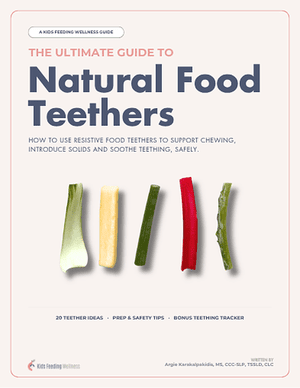
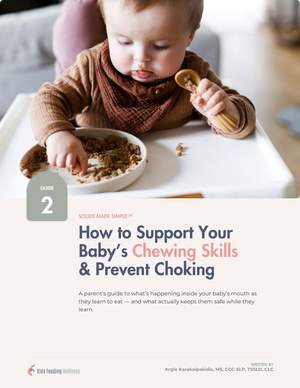
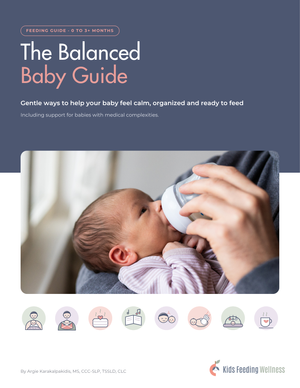
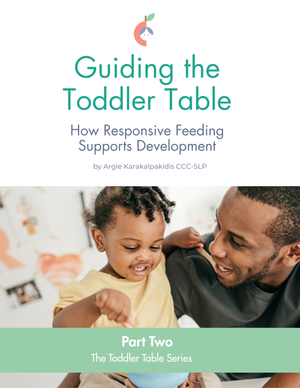
Practical guides you can use at your very next meal. Pick the one that sounds most like what’s happening at home right now.
Browse all feeding guides →Still not sure? Book a free 15-minute call and we’ll point you to the right next step.


What Families Say
“We learned how to better communicate, understand and most importantly, TRUST our daughter.”
Bottle Feeding Parent
“He now feeds himself with ease and even prefers solids over milk and many purées.”
Starting Solids Parent
“Argie is not just a food therapist; she's a compassionate guide on a journey to healthier eating habits and a better relationship with food for my son.”
Picky Eating Parent
Certifications & Training
Credentials that shape how we assess and support your child's feeding.

ASHA Certified — Certificate of Clinical Competence

Academy of Orofacial Myofunctional Therapy

SOFFI® Certified Professional — Feeding FUNdamentals

Certified Lactation Counselor

Child & Brain Development Nutrition

ableU CEU Course Instructor
Not sure what your child needs?
Every family's situation looks different, and support often means more than one thing. Book a free 15-minute call, and we'll help you understand what would actually make a difference — starting today.
Share a few details and we'll email you a link to book your free 15-minute call.